Average Conversion Rates by Marketing Channel: WhatsApp, Marketplaces, and More
Discover the conversion rates each marketing channel delivers and how to get the most out of every lead so more of your traffic turns into sales.
In digital marketing and ecommerce, conversion rates are a crucial indicator of how well your strategies are working. These rates vary significantly across different marketing channels, and understanding those differences can help you optimize your efforts and your budget.
In this article, we'll look at the average conversion rates for WhatsApp, traditional ecommerce, live shopping, physical retail, and other marketplaces.
Before we start, let's recap:
What is the conversion rate in ecommerce and how is it calculated?
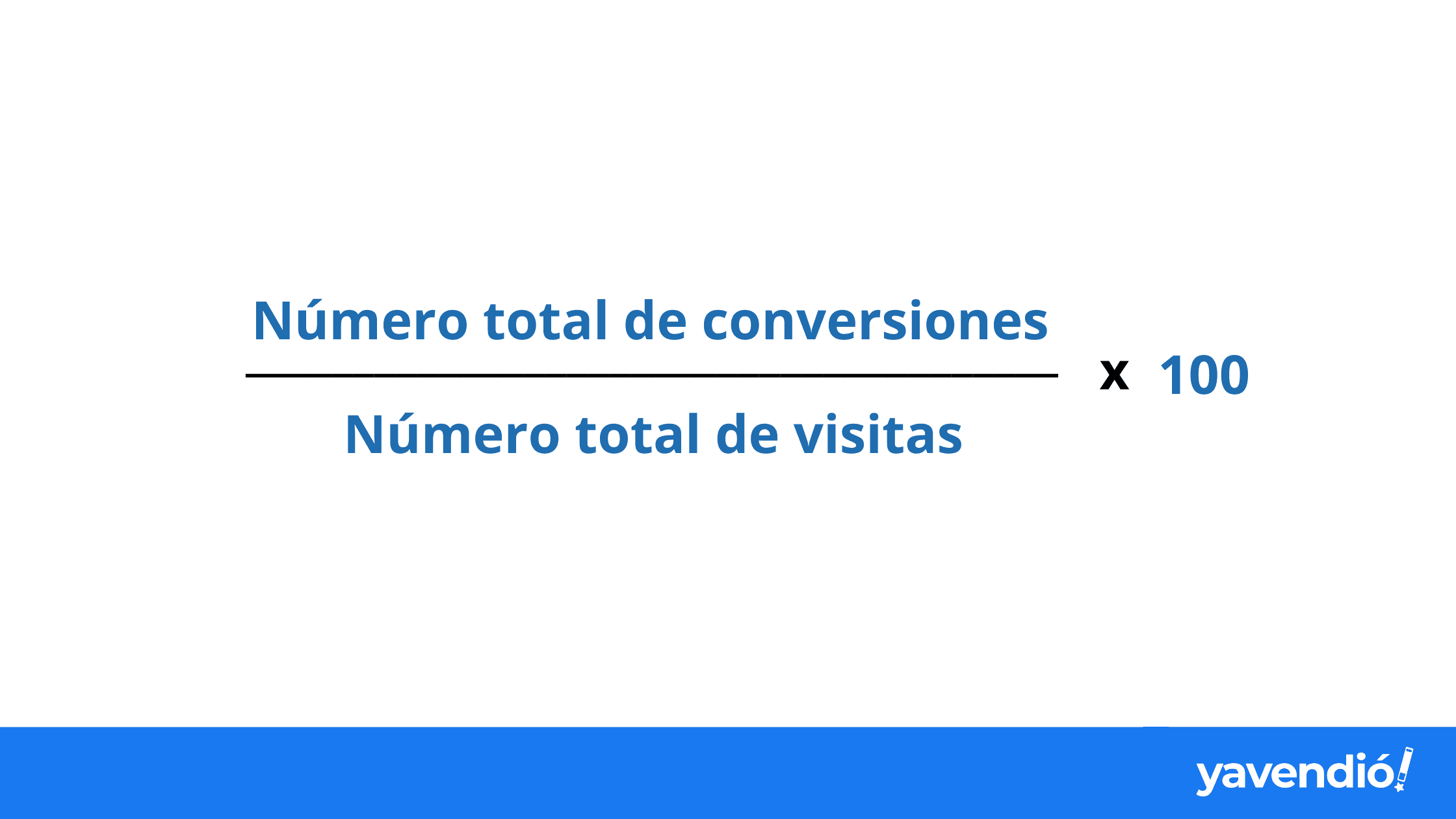
The ecommerce conversion rate is the percentage of visitors who made a purchase on your website or digital channel. You can calculate it easily by dividing the total number of transactions by the number of visits.
Here's the conversion rate formula so you can measure how effectively your channels turn traffic into sales:
Let's say your online store got 5,000 visits this month and generated 125 purchases.
Let's apply the formula:
(125 ÷ 5,000) × 100 = 2.5%
This tells us your online store has a conversion rate of 2.5%, meaning 2 or 3 out of every 100 visitors made a purchase.
But is that a high or a low conversion rate? Let's find out.
What is the average conversion rate in ecommerce?
An online store is no longer the only sales channel available to stand out in ecommerce. Today there are many tools and platforms where customers can interact with your brand and make purchases, each with its own characteristics and behaviors.
In this section, I'll show you five of these channels and their average ecommerce conversion rate ranges. Keep in mind these can vary depending on product type, country, or niche. But they'll give you a solid starting point to then explore how to optimize your digital sales.
1. WhatsApp Business
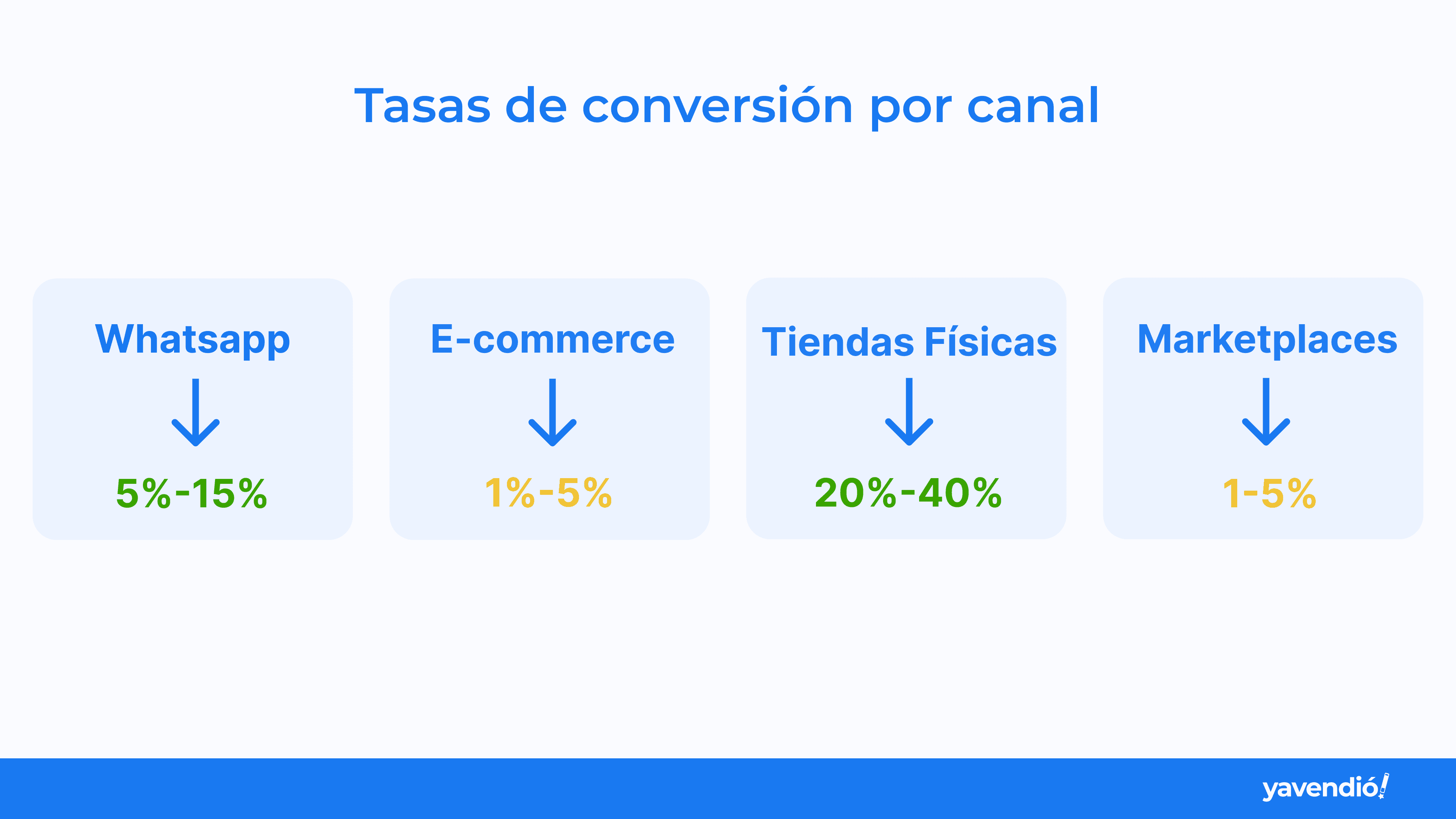
WhatsApp has become a powerful tool for direct marketing and sales. While conversion rates can vary widely depending on the industry and the strategy you use, average conversion rates between 5% and 15% have been reported for well-executed WhatsApp Business campaigns.
2. Traditional Ecommerce
Brands' own online stores tend to have lower conversion rates than other channels, but they offer greater control over the customer experience. Average conversion rates for traditional ecommerce range between 1% and 4%.
3. Physical Retail Store
Although ecommerce has gained ground, physical stores are still relevant and can deliver surprisingly high conversion rates. On average, conversion rates in physical retail range between 20% and 40%.
4. Other Marketplaces
Marketplaces like Amazon, eBay, or MercadoLibre give you access to a broad customer base, but they also mean more competition. Conversion rates on these channels usually fall between 1% and 5%, depending on the product category and the seller's reputation.
5. Live Shopping
Live shopping has become a major trend in ecommerce, capturing consumers with interactive, real-time experiences. This format combines the immediacy of social media with the persuasion of direct marketing, which translates into average conversion rates of up to 10% - well above the traditional ecommerce average.
Digital channel
Average conversion rate
Characteristics
5% - 15%
- Direct, personal communication
- High message open rate (up to 98%)
- Easy to share multimedia content
Traditional ecommerce
1% - 4%
- Website design and usability
- Variety and quality of the product catalog
- Pricing and promotion strategies
Physical retail store
20% - 40%
- Hands-on experience with the products
- Immediate personalized attention
- Instant gratification (buy and own right away)
Other marketplaces
1% - 5%
- Product reviews and ratings
- Ranking in search results
- Competitive pricing strategies
Live shopping
Up to 10%
- Direct interaction and real-time engagement
- Product demonstrated in action
- Ability to build trust and urgency
Dynamic Yield shared these average ecommerce conversion rates, which can also help you see how you stack up at the industry level (calculated from April 2024 to March 2025):
- Fashion, accessories, and apparel - 3.28%
- Consumer goods - 3.41%
- Food and beverage - 5.86%
- Beauty and personal care - 4.61%
- Multi-brand retail - 4.23%
- Luxury and jewelry - 1.19%
- Home and furniture - 1.26%
- Pet care and veterinary services - 2.97%
How to improve your online store's conversion rate
You know better than anyone that attracting visitors to your store isn't enough: the real challenge is turning those visits into sales. In this section, we'll cover practical, actionable ideas you can start applying today to maximize your conversions.
Data-driven personalization
People are more likely to buy when the experience feels "made just for them." Start by tracking what your users do: which pages do they visit? Which products do they click on? What have they bought before? Use that data to create hyper-personalized messages and recommendations.
For example:
- If someone viewed running shoes, show them a banner that says: "Take 10% OFF those sneakers you loved!"
- If they abandoned their cart, send them an email that says: "Hi there! Need any help completing your purchase?"
Mobile optimization
Picture this: a customer tries to buy from their phone, but your site is slow to load. You've lost the sale before it even started! More than half of users abandon a page if it doesn't load quickly, and that includes your potential customers.
The solution is to simplify your mobile checkout. Fast loading, a 3-step checkout, and responsive design are a few ways to do it.
Continuous A/B testing
What happens if you change the "Buy" button from red to green? Or if instead of "See offer" you use "Grab it now!"? A/B tests are like scientific experiments, but for your store, helping you identify the best option to boost your conversion rate.
For example:
- A beauty store changes a call-to-action from "Subscribe" to "Free shipping on your first order!" and sees a 30% increase in conversions.
Emotional loyalty programs
Starbucks doesn't have a rewards app by accident: retaining a customer is more profitable than acquiring a new one. Build programs that connect emotionally with your customers and motivate them to keep buying from you:
- Digital loyalty cards: "Buy 5 times and the sixth is free."
- Exclusive access: "As a VIP customer, we'll tell you before we launch new products."
- Birthday surprises: A special discount on their birthday.
Automation on WhatsApp and AI agents
Use artificial intelligence (AI) tools to power your WhatsApp sales. AI agents can interact with your customers in real time, answer their questions, and guide them toward the purchase.
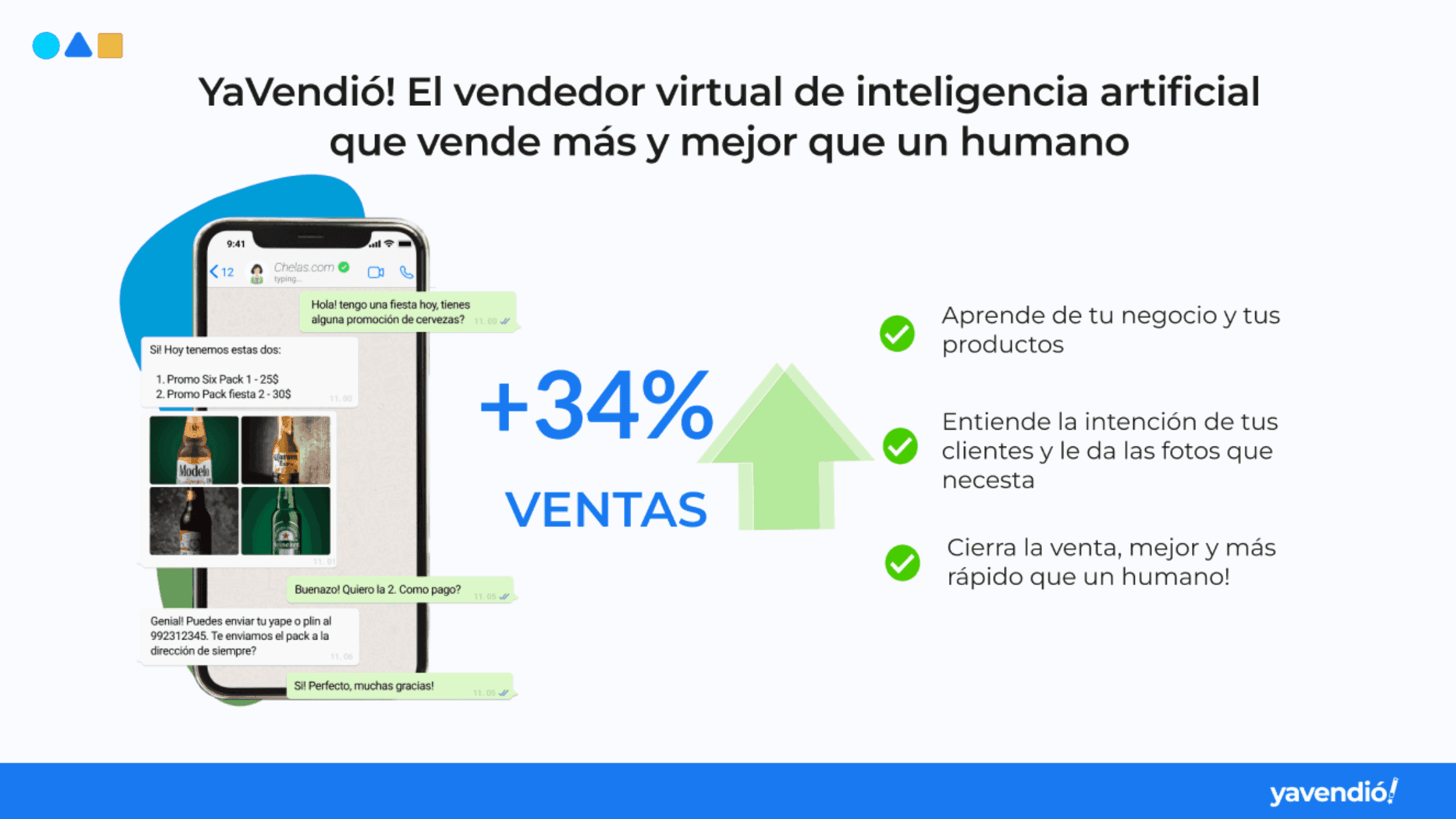
Real case: MarketZhop grew its ecommerce conversion rate from 2% to over 5% using WhatsApp as a sales channel
MarketZhop, an online store selling imported products, faced a common problem in the ecommerce world: despite having a complete website, its sales just weren't taking off.
To make matters worse, every time they launched a social media campaign, they received WhatsApp inquiries, but those came in at all hours, and since they couldn't reply instantly, they ended up as lost sales.
This left the owner frustrated and worried about not reaching the profitability they expected.
How did we help?
At yavendió! we know these challenges inside and out. That's why we deployed our AI-powered virtual sales agent to manage MarketZhop's catalog.
From then on, customer messages started getting answered automatically over WhatsApp, closing sales even on weekends.
The results were impressive
In the first month, MarketZhop went from closing 5 orders a day to more than 20 a day, which meant a +5% increase in its ecommerce conversion rate, all without spending more on advertising or hiring staff!
➡️ If you also sell on WhatsApp, write to us to learn how we can scale your sales with artificial intelligence.
Conclusion
Every marketing channel has its own strengths and challenges when it comes to conversion rates. WhatsApp stands out for its ability to drive high conversions through direct communication, while physical retail keeps its relevance thanks to the immediate experience it offers. Traditional ecommerce and marketplaces, though they have lower rates, let you reach a broader audience.
The key is to develop an omnichannel strategy that leverages the strengths of each platform, continuously optimizing based on data and an understanding of consumer behavior on each channel.
As the cherry on top, innovative tools like the artificial intelligence from yavendió!, a specialized AI sales agent that answers messages and closes more sales directly from WhatsApp, are revolutionizing the way businesses interact with their customers.
By integrating technologies like this, businesses can significantly boost their conversion rates, especially on direct channels like WhatsApp, taking the effectiveness of their sales strategies to the next level.
Article updated in April 2025
Ready to sell more with AI?
Create your free AI agent in minutes. No card. No install.
Read more
How to Make a Sales Report in 5 Steps (+ Free Template)
7 min read

WooCommerce + WhatsApp integration: 4 ways to connect your store
8 min read

WhatsApp banned my account and I never sent spam: what is happening to personal accounts and how to get yours back (2026)
12 min read